
The Next Polymer
Just Became AffordableTHE PLATFORM
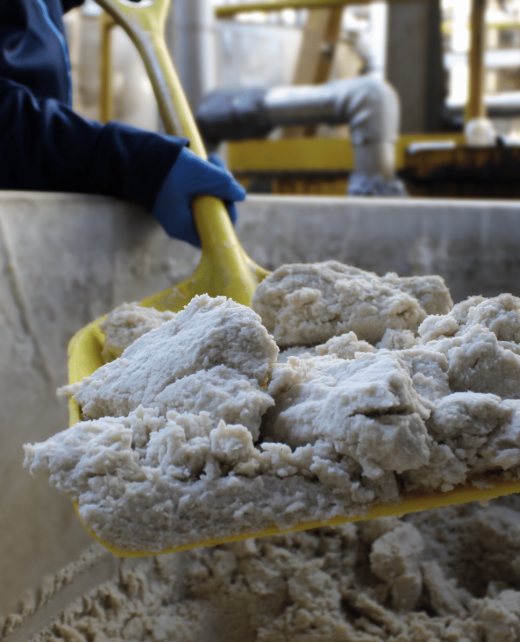
SWFT Labs' one-step process turns raw plant fiber into a charged cellulose nanofiber and a liquid fertilizer, for agriculture, building materials, personal care and water purification.
THE
CHALLENGE
An Advanced Material Locked Behind Cost and Complexity
Cellulose fibers have long been identified as alternatives to synthetics and petroleum-derived inputs. Still, these advanced materials have remained confined to niche applications — too expensive and too difficult to produce at scale.
The world bought about 132 tons of cellulose nanofiber in 2024, while Japan's plants alone can make 1,220 tons a year (Yano Research Institute). Price, not capacity, has kept it a niche.
01. No Scalable Path
Existing methods were great in the lab but too expensive to make at industrial volumes.
02. High CapEx
Producing cellulose fibers usually takes large, multi-step plants, and high input cost.
03. Limited Feedstock
Most processes depend on refined wood pulp or pre-treatments, increasing chemical input and costs.
THE SOLUTION
Until now.
Our platform technology removes cost and complexity barriers, enabling cellulose fibers for mass-market adoption.
Step Change Lower Cost
Streamlined process, no feedstock pre-treatment
Highly Charged
Carboxylated charge enables superior adhesion, retention, and binding
Low CapEx
One reactor, one step. Our reactors are designed to install inside an existing chemical plant.
Tunable Performance
We use advanced surface chemistry to modify fibers according to customer specifications
Broad Feedstock
The process runs on raw plant fiber such as jute, grasses and crop residues. No refined wood pulp is required.
Two Products From One Step
The spent acid becomes a liquid fertilizer, our second product.
TRACTION
A proven foundation
First ton made: January 2025
1 signed multi-year customer agreement
Patents granted in the US, Europe and Canada; 30+ further filings
$8.8M in grants behind the technology
A Global Horticulture Leader Tested It for Four Years, Then Signed
In July 2026 a global leader in horticulture signed a multi-year, multi-million dollar agreement for our fiber, after four years of its own testing.
PRODUCTS
Our First Products
FAQ
Frequently Asked Questions
What does SWFT Labs make?
SWFT Labs makes a charged cellulose nanofiber, also called carboxylated cellulose nanofiber or CNF, and a liquid fertilizer. Both come from raw plant fiber in a single step.
What is the Nitro-Oxidation Process?
It is a patented one-step process invented at Stony Brook University and licensed exclusively to SWFT Labs. It treats raw plant fiber with one common acid to produce charged cellulose fiber directly. The spent acid is turned into liquid fertilizer.
How is the fiber used?
As an additive in small amounts. It holds water in growing media, thickens and stabilizes personal-care products, strengthens concrete and fiberboard, and captures contaminants in water.
Does it replace the ingredients manufacturers use today?
It is designed to be added to existing recipes, not to force a new one.
Where is SWFT Labs?
East Setauket, New York, near Stony Brook University, where the process was invented.
How do I get a sample?
Use the contact form and choose “Request samples”.
Contact form
Let us knowGet in Touch!
Get in Touch!
We can help.
12 Technology Drive, Unit 4
East Setauket, NY 11733
contact@swftlabs.com